Friday, March 30, 2012

Riddle me this, Batman...

If diet soda has no calories, why don't people lose weight when they drink diet soda?  By now, most of us have heard of the Glycemic Index, how much blood sugar response occurs when a food is digested, but until yesterday I had never heard of the Cephalic Insulin Response (CPIR).  I had actually been describing this pathway for years, without any proof that it existed!

So, what is this CPIR and how does it work?  This week's article goes in depth on the topic: Anticipitory physiological regulation in feeding biology, but I'll give you the summary here.  When we eat something sweet, even before it hits the digestive tract, our bodies are already prepped to respond to that sweet stimulus.  When sugar hits the tounge, a message is sent to the hypothalamus, the hypothalamus then sends out a cascade of hormones, one of these being insulin, to prepare the body to recieve sugar.  Insulin, in turn, increases activity of adipose lipoprotein lipase which absorbs sugar from the blood.  So, just by tasting something sweet (and not necessarily swallowing it) we see an insulin response and a decrease in blood sugar.  This "pre-digestive" insulin response is smaller than the one that occurs when we are digesting an actual sugar, but it is there nonetheless.  I think you can see where I'm going with this...

When an artificial sweetner is used instead of a natural sugar sweetner, the CPIR still happens.  So we still see an insulin release, and we still see the corresponding decrease in blood sugar.  When blood sugar goes down, another signal is sent from the hypothalamus- one that calls for sugar intake to increase circulating blood sugar.  In response, we start eating, and we tend to eat foods that are higher in carbohydrates in order to raise blood sugar. 

Usually when I get to this point in the explanation, people tell me "ok, well now that I know that, I just won't eat high sugar things. It will be easy."  Unfortunately, it is not easy to go against thousands of years of evolution.  No amount of willpower can deny these responses- they are there and you will respond to these hormonal signals without even realizing it.  Hence, no one loses weight drinking diet soda. 

That being said, sure it's not as easy as this explanation would make it seem.  The CPIR also has a large role in managing eating behaviors as well. Obese individuals have a blunted CPIR when consuming sweet foods, but normal insulin responses to sweet foods.  Additionally, everyone has a different CPIR and CPIR can vary based on the time of day, food consumed prior to sweet consumption, and past experience/food preference.  There's is always more research to do :)     


Wednesday, March 21, 2012

Stress

Let's face it, we live in a stressfull society.  If I ask ten people what is stressing them out right now, I will get ten different answers.  Most people focus on the things that are providing emotional or psychological stress (i.e. their significant other, the stock market, what to make for dinner, the balance of their bank account, etc.), yet very few identify physical stress (exercise) or immune stress (that cold you're fighting off) as sources of stress.  Stress, as we're talking about this week, is any number of situations that causes activation of the fight or flight response.  We all know that in stressful situations, our logical thinking patterns are less clear, attention span may be decreased, and memories are not formed as readily.  This is caused by the blockage of dopamine release and dopamine binding by epinephrine in the system.  That explains short term stress, but what about long term stress?  Very few stresses that we experience in today's society are short term, "flight or fight" responses.  To start loonking at this question, let's start at the very beginning...

Prenatal stress produces learning deficits associated with an inhibition of neurogenesis in the hippocampus, yikes.  Ok, this looks pretty bad.  The above study found that rat pups whose mothers had experienced stress during pregnancy experienced a greater decline in cells proliferation in the hippocampus than rat pups with mothers that did not experience stress during pregnancy.  Lifelong, these changes in hippocampal cell proliferation resulted in a 45% difference between prenatally stressed and non-stressed rats.  The "stress rats" also showed delayed learning on a spatial memory task and had an altered response to the spatial memory task, which normally causes increased cell growth in the hippocampus.  The theory advanced by the researchers here is that the early exposure to stress causes an increase in Hypothalamic-Pituitary-Adrenocortical Axis (HPA) activity, resulting in early exposure to corticosteroids.  Corticosteroids are known to alter the structure and function of the cells in the hippocampus, hence the changes that were demonstrated in this experiment. 

That all seems like really bad news, but here's the good news: a second study (abstract) found that postnatal care desined to decrease infant stress reduced ALL of the effects from the first study.  In addition, other studies have found that rat mothers naturally give their pups extra TLC after a stressful pregnancy.  This additional care post partum may be nature's way of correcting, or "making up for", the harm caused by corticosteriod secretion during the pregnancy process.  Smart rats, now we just need to teach people to do the same, right? :)    

Tuesday, February 28, 2012

When you smile, the world smiles with you?

I hear this statistic a lot: "scientists have found that ___% of communication is non-verbal.", with the blank being filled in with a number anywhere from 55 to 95.  So, what is it?  Is non-verbal communication all important (as the 95% number would suggest) or is it somewhat important but we can make up for it through other channels of understanding (as 55% would suggest)? 

As I was looking into this, I found this article that has sparked my interest- Flow of affective information between communicating brains.  Let's discuss, shall we? 

Humans evolved as a social species.  Communication, through both verbal and non-verbal channels has been an important driver for increasing brain size in humans.  In fact, the development of proto-language is thought to have ramped up brain size in human ancestors from 750,000 to 50,000 years ago, with a huge jump in brain size at the 50,000 year mark.  Proto-language is the combination of gestures and one to two words that can be interpreted by others to create action (things like "look there" and "let's go").  But, the key here is to understand the vocalization and the action- the "receiver" must know how to interpret the signals coming from the speaker.  This reception cabability requires us to interpret not just the meaning of the words that are spoken, but the context in which they are presented.  If I say "let's go" and smile, you get a much different meaning than if I say "let's go" and frown.

Here's where things get really cool (and complicated).  When I smile, a series of neurons become active within my brain associated with smiling- both the motor neurons involved in the action of smiling, and the emotional neurons involved in feeling happiness.  When you see me smile, your neural network associated with smiling becomes activated as well through what is called "mirror activation".  This happens because, in your attempt to interpret my emotions, you need to feel those same emotions.  Furthermore, not only are you trying to interpret my emotions, but you're also trying to predict my future actions, and the best way to predict another's actions is to actually feel what they're feeling.  The old saying about "walking a mile in someone else's shoes" really rings true. 

How do we know all of this?  The study above is a really great place to start.  These researchers looked at brain activation in six different couples who had been involved in romantic relationships for at least a year.  The reason they did this with romantically linked couples is because the flow of affective (emotional) information is stronger between couples who are romantically linked than it is between strangers (thoughts on this in just a little bit).  While one partner, the sender, was asked to think about differrent emotions and "emerse in them" (basically not to pose emotions, but recall true emotional states and allow the facial expressions to follow), the other partner, the perceiver, was asked to look at the emotions (by recording) and interpret the emotions felt by the sender.  Both individuals were scanned using fMRI durring their assigned task.  The fMRI scans of the senders were then analysed for emotion-related activity and the perceiver's scans were analysed for activity that reflected the emotion-related activity of the sender.  In addition to looking for reflective activity, the researchers also analysed the scans to discover the time course of the flow of information from the sender's brain to the perceiver's brain. 

What the researchers found was that the emotional state of the sender could be predicted simply by looking at the activity in the perceiver's brain.  More specifically, activity in the parietal, temporal, frontal and insular brain regions specifically reflected the emotional network used by the sender to convey affect.  An even more amazing finding was that early emotional information from the sender was also reflected in the perceiver.  On top of that, there was a time delay at the onset of emotion from the sender to the perceiver (up to 8s.) that reduced with viewing time (down to 0s.).

Ok, so what does all of this mean?  We already "knew" that non-verbal communication is an important part of communication as a whole.  Now we see that, as someone perceives communication they interpret the information with a network of brain structures and that perception evolves over time as the emotion is communicated.  Now, this study did use couples who were romantically linked for a year to four years (the average was two years).  So, granted, these individuals were probably a little more "in tune" with one another than people who are strangers, and many might see this as a fault of the study, but think about it this way- who is the most important person to understand emotionally?  If you can't interpret how your sexual partner is feeling, you're probably not getting any, right?  When we think about how language (specifically proto-language) developed, it wasn't about communicating how to perform technical skills (i.e. hunting, tool making, etc.), our closest evolutionary relatives can do that without language.  Language is about relating to the social group- communicating "who did what to whom" is an important part of social and sexual selection- so of course our neural networks would become tuned to those people who we deem "most important".  A couple of interesting follow-ups for this experiment would be to see how people react to someone they find attractive, but not someone that they have any emotional relationship with, or how people perceive famous actors/actresses as they perform emotions (although, this would require brain scans of the actors/actresses as well...). 

All of this information is great, but really, the most important part of any piece of information is how you use it.  While strangers may perceive your emotions somewhat differently than people you know, strong emotions still cause activation in neural networks of the perceiver.  This is vitally important for people who want to communicate information to another and "have their point heard".  Maybe you're interviewing for a job or presenting information in front of a group of people- this study simply reminds us that HOW we communicate is just as important (if not more important) as WHAT we communicate. 

Friday, February 3, 2012

What is the deal with drummers?


Granted, John Bonham is one of the greatest drummers of all time, but watching any drummer really just amazes me.  Even in the first minute of that performance, John Bonham manages to generate different rhythms with each of his limbs- and he's just getting started there!  My question is, how the hell do they do that?  I've always held a theory that maybe drummers are wired differently- that they are somehow able to disconnect the right and left sides of their brains so that the motor signals don't interfere with one another.  But it's more than just that...take a look at this performance, not only does he have to generate different movements with each of his limbs, each movement with it's own timing and coordination pattern, but he's also got to do that while processing the sensory feedback coming from the drum kit (at some level- maybe it's not conscious processing???).  Ok so I found an article this week that MAY help with this question, I'm not saying that it will answer it completely, but maybe I'll have a clue as to why drummers are motor control freaks.

This article was published last year in PLoS One- Excitability of the Motor Cortex Ipsilateral to the Moving Body Side Depends on Spatio-Temporal Task Complexity and Hemispheric Specialization.  Long title, but here's the rundown of what they did.  The subjects in the study were asked to either rest, move their hand (wrist extension/flexion), foot (ankle dorsi/plantar flexion) or both hand and foot at the same time.  When they were asked to move the hand and foot at the same time, they were either required to move in-phase (i.e. wrist flexion and plantar flexion at the same time) or anti-phase (i.e. wrist extension and plantar flexion at the same time).  The researchers measured the activity of the extensors and flexors on both the moving side and the non-moving side- subjects were told to restrict movement to JUST the side that they were asked (i.e. left or right).  So, while the researchers were monitoring the EMG activity of the non-moving side to make sure there wasn't any muscle activation, they were also monitoring the activity on the side of the brain that controls the non-moving side. 

Here's where things get interesting...the results were that there is a significant facilitation effect on the motor cortex for the non-moving side when a complex coordination pattern is used (i.e. hand and foot moving anti-phase). WHAT??? Ok, back it up...basically what they found was that it's harder to keep the non-moving side still when doing a complex movement pattern.  Hmmm, back to the drummer, maybe what's really happening is that they're using this to their advantage and cross patterning movements so that they're getting the maximum subconscious "help" from their brain.  Most people that I've spoken to about this say that as soon as they start thinking about what they're doing on the drum kit, that's when they loose the rhythm.  So conscious processing interferes with the natural facilitation of movement that occurs due to the complexity of the movement pattern.  Rather than disconnection between the two sides of the brain, there's actually a huge amount of cross communication going on and it is exactly that communication that helps them to do what they do!    

Wednesday, February 1, 2012

On the road to understanding autism (part 3)

This week I'll be taking a look at the chemicals associated with Autism Spectrum Disorder and summing up the article that I've been reading over the past three weeks (if you missed it the first two times, here's the link again!).  Let's jump right in to the discussion of neurochemicals...

One of the great things about looking at neurochemicals and autism is that here we have a real and true theory for what's occuring in ASD- the excitation/inhibition theory postulates that there is a lack of both local inhibition and long distance excitation in the developing brain that leads to the expression of autism.  Based on what we've already seen from exploring the overproduction of gray and white matter, the lack of minicolumnar structures and the changes in the different areas of the brain, this theory makes sense, but it's the underlying chemistry that really pulls everything together here.

The first area that researchers are really concentrating on are the glutamate/GABA chemical pathways.  Glutamate is the most abundant excitatory neurotransmitter in the body while GABA is used for inhibitory connections.  Glutamate is intricately involved in learning and memory through long term potentiation (which is a fancy way of saying that it helps with the "experience dependent plasticity" that I've been talking about for the past two weeks).  In patients with ASD, we see higher than normal concentrations of glutamate production, and decreased GABA receptors.  This partially explains why we see a lack of experience dependent plasticity in the brains of children with ASD.  If there is an abundance of glutamate in the system, then we will see a pattern of local excitation (going back to the excitation/inhibition theory), the local excitation will result in more synapses being upregulated in certain areas, while long distance connections are decreased or inhibited (because the connections in the minicolumns are disorganized due to the excess white matter).  All of this results in local circuits that are highly active and excitable (think repetative behaviors), and disconnection between areas that would normally overrule and inhibit local excitation (executive function of the frontal lobe).  


In addition to glutamate/GABA differences, researchers have also found that about 1/3 of patients diagnosed with ASD have increased levels of serotonin.  In normal development, the amount of serotonin in the system decreases as a child ages, but serotonin levels seem to be independent of age in the patients with ASD who demonstrate high serotonin levels.  Researchers have found that high serotonin levels have an effect on language learning, self-injuring behaviors, and IQ scores, but there has been no direct correlation demonstrated between amount of serotonin and degree of ASD symptoms.

One of the most interesting findings in the neurochemical arena comes not from the patients diagnosed with ASD, but from their families.  Parents and siblings of children diagnosed with ASD also demonstrate higher than normal glutamate and serotonin levels.  This truly shows how complex ASD is, "The Problem" cannot be simply described by looking at neurochemicals, genes, gray matter, white matter, or neuroanatomy.  In order to help people diagnosed with ASD we need to take a wholistic view and understand that it is the interaction of all these factors which result in the expression of ASD symptoms.  In order to effectively treat these symptoms, we need to understand the interaction and address the symptoms from their root cause.  Through exercises (both physical and mental) that directly challenge the functions of frontal and parietal lobes, the amygdala, the anterior cingulate, and the fusiform gyrus we may start to see progress in treating ASD.  Through activation of these areas, I would expect to see experience dependent modification of the gray and white matter both in the areas that are challenged, and those that used to be over active but recieve less stimulation due to the specificity of the challenge presented.  Perhaps the overproduction of glutamate and serotonin cannot be changed, but their effects on the system can be modified through the repetition of the challening stimulus.  In other words, we need to create an "artificially challenging" environment that supports experience dependent plasticity that will override the genetic and structural adaptations that the child with ASD has had in response to his "normal" environment.  THAT BEING SAID, I want to make it clear that I'm not saying that the parents are to blame for a child developing ASD, and I'm not saying that "The Problem" is purely genetic either- the "normal" environment that most kids grow up with is simply not enough, or the right, stimulation to override the natural tendencies of these particular children to develop ASD symptoms. 

Moral of the story...a combination of nature and nurture causes ASD to be expressed and a combination of nature and nurture can help these kids to lead a "normal" life. 

Wednesday, January 25, 2012

On the Road to Understanding Autism (part 2)

     Last week we started with some broad brushstrokes to our understanding of how Austim Spectrum Disorder develops in children.  This week we'll continue to explore the development of ASD through understanding how the different structures in the brain are affected in children with Autism.  I'll still be using the same article as last week- here's the link if you missed it last week.

     This week we'll take a look at what's happening in a few specific areas: the frontal and temporal lobes, the anterior cingulate cortex, fusiform gyrus, the amygdala, and the cerebellum.  Remeber, overall in children with ASD there is a general early brain overgrowth that is thought to be linked to the dysfunction of two genes- PTEN and RELN.  This overgrowth causes additional white and gray matter to be produced in the brain in addition to decreasing the brain's natural ability to go through experience dependent pruning of neurons.  Also, the minicolumnar structures of the brain are affected in children with autism causing what could best be described as confusion between "important" and "unimportant" connections in the brain.  With that short summary, let's move on to this week's fun stuff!

     The frontal lobe sits just behind the forehead and extends back to just behind the temple.  Commonly, the frontal lobe is described as the "executive" center of the brain- it is where thinking, planning, and goal formation takes place.  The frontal lobe also houses the premotor and motor cortices.  The left and right frontal lobes are slightly different in function- the left frontal lobe houses Broca's Area, the speech-motor area of the brain, whereas the right frontal lobe plays a large role in our ability to understand nonverbal communication.  Here's where things start to get interesting for our children with ASD, normally the frontal lobes are the last to develop, with a 48% volume increase from the ages of 2 to 9 years old.  For children with autism, we only see a 10% increase in frontal lobe volume during the same time period. 
    
     "Now, hold on..." you say, didn't I just point out that children with autism have early brain OVERGROWTH, now I'm saying that they don't have enough growth?  The overgrowth that I talked about last week can start occuring anywhere from day 40 of gestation and into the first year of life.  The same factors that account for the early overgrowth may account for the lack of growth in the 2-9 period.  Remember how experience dependent pruning works- the repetative stimulation of certain connections in the brain drives us to become "societal specialits" in our culture.  When there are too many connections surrounded by oligodendrocytes (remember those are the insulation that makes connections faster...for now), we almost never take the same route to get to the same behavior.  When everything seems important, we can't easily prune away "unimportant" connections.

     A very specific difference is seen in children with autism, the change in lateralization of the speech motor area.  As I said earlier, the speech motor area (Broca's area) is typically developed on the left side of the brain, but in autistic children it is often misplaced in the right frontal lobe.  Conceptually, this shouldn't really change the language abilities of a child- we have motor areas on both sides of the brain, so speech motor neurons located on the right side of the brain should work the same as those on the left side.  The key here is that along with the change in lateralization of speech, the brain that is affected by autism also has poorly developed minicolumn structures contributing to a lack of communication between the two hemispheres of the brain, specifically between the language areas.  On top of this, the switched specialization of speech may displace the ability to interpret nonverbal communication which is another characteristic of ASD.
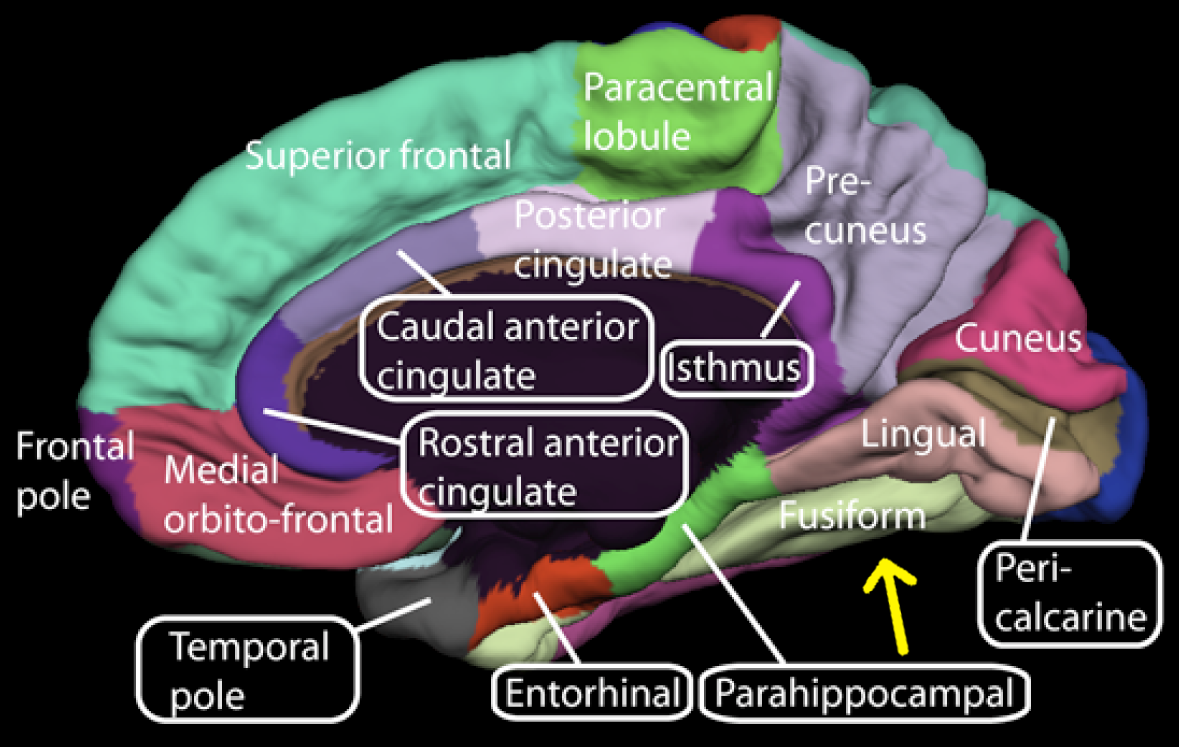
      The fusiform gyrus is our next stop on the road to understanding autism.  This area is typically responsible for color recognition, face and body recognition, word/number recognition, and within category identification.  The left fusiform gyrus is responsible for recognizing "face-like" features in objects while the right fusiform gyrus determines if the object is/is not an actual face.  Both sides need to work together for us to correctly identify objects in our environment. In children with ASD we find a mixed story for the fusiform gyrus- underactivation when it comes to unknown faces, and normal activity with known faces.  It appears that there is a  threshold to activity in the fusiform gyrus for children with ASD.  This "threshold theory" of activation fits in with the overproduction/underpruning idea because these individuals need a greater stimulus (i.e. a face that they have seen over and over again) in order to have activity in this area.  In other words, because there are so many ways to communicate with the fusiform gyrus, a known face will activate more neural circutry and therefore result in a "normal" activation pattern.

     One of the most common observations of children with ASD is the performance of ritualistic and repetative behaviors.  Through the study of the anterior cingulate nucleus we can begin to get a picture of why these behaviors exist.  The anterior cingulate nucleus plays a large role in response inhibition, determining the difference between "self" and "others", and error detection.  Interestingly, research has found that the anterior cingulate cortex is hypoactive in children diagnosed with ASD.  It is now thought that, instead of isolating "self" vs. "others" and ignoring social cues, these children may be unable to divide themselves from the actions of others.

     Many of the areas already presented depend on the amygdala for initial activation.  The amygdala acts as a gateway for facial and emotional recognition, enhancement of memory for emotional events, and predicting reward values.  Since it has such a key role in influencing activity in the frontal and temporal lobes, the fusiform gyrus, and the anterior cingulate nucleus, the amygdala has been highly researched for it's link to autism.  Similar to the story thus far, the amygdala in children with ASD shows enlargement prior to age two, but a lack of growth after the age of two.  While the size of the adolescent and adult amygdala is roughly equal between children diagnosed with ASD and their age matched "norms", the timing of amygdala growth is critical to the behaviors expressed.  Take a minute to think of the things that are scary to a two year old...a new location, being left alone without mom or dad, bright lights, loud noises, etc.  When a two year old reacts to these stimuli by screaming and crying, we understand, but when an eight year old diagnosed with ASD reacts in a similar fashion, we say that it is inappropriate behavior.  The eight year old is simply reacting to the situation with the amygdala that has not grown since he was two.  More studies need to be done in this area, but I wouldn't be surprised to find a link between high cortisol levels and increased early enlargement of the amygdala.

     Our final stop on the road this week is the cerebellum, commonly associated with balance and equilibrium, but this structure also plays a large role in working memory, online movement corrections, and is highly active during the initial stages of movement learning.  In studying the cerebellum of patients diagnosed with ASD, researchers have found an increase in cerebellar volume proportionate to overall brain volume.  Other findings related to the cerebellum have been inconsistent, with some studies finding increased cell density and others finding decreased cell density.  It appears that this is an unfolding story and the cerebellum could be one of the areas that we see good developments in the research in years to come.

     So, now that we've explored the structures involved in autism, we need to gel this story together.  No structure in the brain works in isolation, it is the concert of all these structures working together that creates the behaviors that are expressed on a regular basis.  Through the understanding of what parts each structure plays, we get a better understanding of the whole concert.  One of the most common behaviors associated with ASD is that of stereotyped behaviors, repetative behaviors that the child displays for any number of reasons.  Tracing the activation through the structures that we have discussed, it would appear that the first structure involved would be the amygdala, which, due to it's enlargement, overactivates in response to a stimulus that the society would call "normal".  This overactivation is then passed on to the fusiform gyrus, perhaps resulting in overriding the ability to recognize what is "self" and what is "other".  The overactivity in the amygdala is also passed on to the frontal lobe through the myriad of connections that the frontal lobe has yet to prune away through experience dependent learning.  Now the frontal lobes are active, yet recieving contradictory signals, and since speech has been mapped onto the right side of the brain (as opposed to the left) and the right and left sides are unable to communicate in order to solve the overactivation problem, the child begins to move in a repetative manner in an attempt to "cancel out" the stimulus that resulted in overactivation in the first place.  Finally, the cerebellum comes into play because it is trying to correct the movement that is traveling from the motor cortex in the frontal lobe, but since the error detection matrix of the anterior cingulate nucleus is not working properly, the messages that are recieved in the cerebellum are contradictory (stop, go, stop, go, stop, go).  GREAT, what do we do about this?

     First of all, understanding is a big part of dealing with what's going on.  Knowing that the amygdala is reacting like a two year old's will help us to limit the environment and the number of stimuli.  Think about what a two year old likes and dislikes, what is scary and what creates joy for a two year old, then we need to temper that with the understanding of which brain areas are working at age level.  There is a compromise to be found here by speaking to the two year old while serving the age appropriate areas.  The age appropriate areas can tune in to help the other areas to go through experience dependent pruning once they understand that is their job.  Through providing a consistent environment with stimuli that are predictable, regular, and rewarding, the brain can and will adapt to society with which it interacts.  Finally, we need to understand that two year olds do not become eight year olds overnight, it's a process of maturation and we can't skip steps along the way.

     Next week, we'll take a look at the neurochemicals involved in ASD, so get ready for serotonin, dopamine, glutamate and neuropeptides!    


Tuesday, January 17, 2012

On the road to understanding autism (part 1)

     Alright folks, we're tackling a big one this time, so big it's going to be a two parter!  Here's the article "Recent developments in neuropathology of Autism Spectrum Disorder".  First, let's describe the problem...

     According to the National Institutes of Health, 1 in every 110 eight-year old children are diagnosable with Autism Spectrum Disorder.  The ratio of boys:girls affected is 4.5:1 (i.e. for every 9 boys we see with autism, two girls will be affected as well).  When we look at the genetics of autism spectrum disorders, we see that heritability accounts for 90% of the autistic traits that are expressed.  But, while genetics are important, they aren't the whole story.  Unlike eye color or skin tone, the heritability of autism is a complex system of genes that can be turned on or turned off depending on environmental factors.  Right now, researchers are in the first stages of exploring just what these genes do when they're turned on, the next step is to figure out what turns these genes on and how to turn them off.  Understanding that the "cure" for autism is not just a "simple genetics" answer is important because it gives us the ability to change the outcome.   
   So, let's explore a little more, shall we?  What is happening to these kids?  Where do some of the problems lie?  First of all, children who are eventually diagnosed with autism show a dramatic, early overgrowth of both gray and white matter in the brain.  Gray matter is made of of neuron cell bodies and is primarily found on the outside (cortex) of the brain.  White matter consists of the axons of the cell bodies and the oligodendrocytes that surround the axons.  Once upon a time, it was thought that all the oligodendrocytes did was insulate the axons in order to increase the speed of communication between cells.  We now know that these cells can also transmit signals of thier own (I'll save that for another post).

     While there are several genes that could be involved in overproduction of gray and white matter, two genes are really being examined for their role in this process: PTEN and RELN.  PTEN is a tumor suppressing gene that regulates the cell cycle, specifically decreasing cell proliferation and causing cell death.  In the brains of autistic children, it would appear that PTEN is somehow turned off or its effects are diminished.  RELN regulates cell migration and positioning in the developing brain by regulating cell to cell interactions.  It appears that RELN is reduced in children with autism and the timing of the reduction of RELN could have a significant impact on the symptoms of autism.  The RELN gene is normally highly active during prenatal and postnatal development, where it directs the layering of the cortex in an "inside-out" development fashion (i.e. the structures of the lower brain stem, limbic system, and cerebellum are layered in first, followed by the outer layers of the cortex).  Without RELN, the brain develops in an "outside-in" fashion, similar to reptillian brains.  Depending on when and how RELN decreases, a host of behavioral issues could be expressed basically due to misplacement of nerve cells in the brain. 

    I can hear you out there, you're asking why brain overgrowth is a bad thing, aren't you?  Now we've got to look at "normal" development for a minute.  Human babies are born with about one hundred billion brain cells that are largely unconnected.  During the first few years of life, we develop somewhere around 1,000 trillion connections.  Through the normal process of development, the neurons that are not connected die off because they're not used.  For example, we have all of the cells needed to create every sound known to human language, but a baby born to English speaking parents does not need the neurons associated with generating Chinese speech patterns, so those neurons die off. As we mature, some areas of the brain grow, while other areas are pared down.  In the brains of autistic individuals, we see growth, but not as much die off.  The die off is a very important part of development- it allows us to become specialists in our own culture.  Without die off, we do not develop this specialization, and as a result, may exhibit behaviors that do not fit with our current society. 

     On to this white matter issue- white matter is another step in our specialization of behavior.  Once we perform a behavior once and are praised for performing that behavior (think of a baby saying "mama"), every repetition of the behavior/praise circuit helps us to strengthen that behavior.  The strengthening of behavior is where white matter comes in.  White matter will insulate those axons associated with generating the desired behavior so that those axons become preferentially faster.  Now when we make the noises associated with "the woman who gave birth to me", it comes out as "mother" instead of "母親".  Excess white matter would again make it difficult to specialize because both important and unimportant axons are being insulated, when all of the pathways seem important, it becomes hard to choose the "right" one.

     Along the lines of experience-dependent behavior specialization, we also find that the minicolumnar structures in the temporal, frontal, and anterior cingulate areas are abnormally formed.  Minicolumns are dendrites (the recievers of a neuron), cell bodies, and axons that have been bundled together through experience-dependent activation patterns.  In children with autism, what we see is that the number of cells per minicolumn are close to average, but the volumes are reduced.  Additionally, it appears that there is a lack of development of inhibitory connections for children with autism.  Thinking about this in light of the overdevelopment of gray and white matter, minicolumnar development could be occuring too quickly and too closely for children with autism.  Normally inhibitory connections allow for precise excitability, but in autism we see hyperexcitability and hypersensitivity of the minicolumns because of the lack of inhibitory connections.  Outwardly, this results in the behaviors that we associate with Autistic Spectrum Disorders- repetative behaviors, hyperactivity, sound/light sensitivity, etc.  Interestingly, this could also lead to an inability to attend to the surrounding environment as well because everything in the environment is labeled as "important".  The location of these abnormal ministructures is also important- the temporal lobes are intricately involved in our ability to process sound and hold our centralized memory structures.  The frontal lobes are responsible for executive function, including inhibition of behaviors that do not fit with our society.  The anterior cingulate is involved with regulation of heart rate and blood pressure, and also plays a role in reward anticipation, decision making, empathy and emotion.

     Wow, that's a lot of information so far and we've only scratched the surface of this article.  I'm going to end this post here because next we'll be getting into the specific brain regions that are involved in autism and I don't want that to get lost in a long post. :)


Wednesday, January 11, 2012

In the beginning there was...

     A neuron or many neurons?  This is a question that could help us to understand how the nervous system became so complex.  This week's paper "On the Independent Origin of Complex Brains and Neurons" (Moroz, L. 2009) discusses the difference between monophyly and polygenesis.  In other words, we're talking about the difference between one cell evolving into the multitude of nervous cells or a host of cells that evolved in parallel to create the complexity of our current nervous system.
     The evidence pointing towards monophyly for the nervous system comes from comparing the development of the nervous system of the fruit fly (you'd be surprised how much neuroscience comes from those little guys) to the development of chordate nervous systems.  What we know is that the gene transcription factors for the ventral (i.e. front side) nervous system in the fruit fly are the same as the dorsal (i.e. back side) gene transcription factors in mammals.  Also, we see the same gene expression pattern in the front, middle and back of the developing nervous system for mice, fruit flies and sea squirts.  The fact that there are common gene transcription factors between insects and mammals points to a common ancestor way back in the evolutionary framework.  The monophyletic hypothesis suggests that there is a 'common ancestor' of all animals that has a compact nervous system and that this compact nervous system (that came from one cell type) diversified into the complex nervous systems that we see today.  This is all well and good, the evolutionary tree has some animals who have a dorsal and a ventral nervous system, and some that have a diffuse neural net, and these animals appear AFTER (evolutionarily speaking) the 'common ancestor' who had a compact nervous system.  You might be thinking "what's the problem with that?" (I thought that too).  Here it is- in order for the monophyletic theory to explain how simplification and reduction of the compact nervous system into different cords or neural nets the animal would either have to be a parasite or live in an environment that allows for no sensory input.  Unfortunately (for the monophyletic hypothesis), these systems are seen in animals that are free roaming and preditory.
   So, we need a new hypothesis...polygenesis.  Here we start with a 'common ancestor' who has a diffuse neural net consisting of many different cell types.  The neural net then evolves in parallel across many different lineages to create the complex nervous systems that we see today.  The 'common ancestor' would still have the same gene experession that we see in fruit flies and mammals, but since the fruit fly and mammal nervous systems developed in separate but parallel lineages, these transcription factors became switched to their current locations.    
     Alright, really, so what.  A neuron is a neuron, right?  When we think in broad terms of what a neuron is (a polarized cell that quickly transmits messages from one place to another), sure a neuron is a neuron.  But, the HOW of the neuron is where complexity comes in.  If a neuron was "just" a neuron and all neurons were the same, then we wouldn't be able to see, smell, taste, touch, run, type, feel emotions, and think- we would only be able to do ONE of these things which would be to feel pain(most likely based on the nervous systems of the simplest animals out there).  With a nervous system that developed from many different types of secretory cells, we can have nervous system cells that become specialized as sense receptors, specialized at carrying signals, and those that specialize in transimitting signals.  We can have neurons that increase the sensitivity of other neurons and those that inhibit other neurons.  With a polygenetic viewpoint, the specialization of the neurons can develop simultaneously rather than having to develop linearly and, therefore, we can develop the vast amount of biodiversity that we see both in the fossil record and in the environment today.
     Where does this lead us?  The information here sets the stage for understanding how the nervous system manages all its jobs.  From sensation to output, we need complexity to function in the world.  In addition, understanding how cells evolved in parallel (from a molecular and genetic standpoint) may allow us to develop methods for reparing damaged neurons.  
      

Friday, January 6, 2012

What is this all about Tina?

Right now we are experiencing an explosion of information on brain structure, function, and connections.  Although we've got a lot of great information out there, we seem to have a gap between the research and the application of that research.  Many people (myself included) look at this research and say "wow, that's so cool, but...what does it mean in everyday life?".  That's the question I hope to answer with this blog.  I'll be taking one journal article each week, reviewing it, maybe proposing some additional or follow up research, and putting out there how I think this research could be applied to life in the 21st century.  You, dear reader (if there are any out there!) are welcome to comment, propose, point out, question, and discuss the research.  Also, if there is something that you want me to read, feel free to tell me about it so that I can put it in my research cue!  The only "restriction" on this blog is that it's got to tie into neuroscience (and that covers just about everything under the sun).  Some weeks I'll be posting about specific neurological disorders, such as Autism or Parkinson disease, other weeks we might take a look at language development, how music affects the brain, or metacognition (how we think about how we think).  This is gonna be fun...

 The Brain—is wider than the Sky—
For—put them side by side—
The one the other will contain
With ease—and You—beside—

The Brain is deeper than the sea—
For—hold them—Blue to Blue—
The one the other will absorb—
As Sponges—Buckets—do—

The Brain is just the weight of God—
For—Heft them—Pound for Pound—
And they will differ—if they do—
As Syllable from Sound—
-Emily Dickinson